Visit
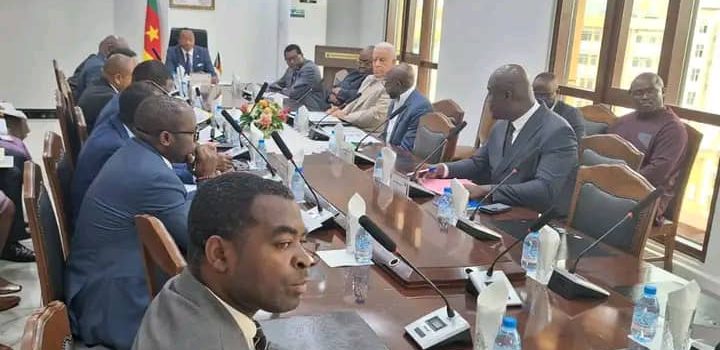
The Ministry of Public Works has once again brought together the stakeholders in the Ebolowa - Akom II - Kribi road construction project, with a view to making the final adjustments before work can begin. The meeting was held on March 4, 2026 on the Ministry's premises in Yaoundé.
Chaired by the Minister of Public Works, Emmanuel Nganou Djoumessi, the aim of the meeting was to review the various prerequisites for effective implementation of the project, in particular securing the launch of work in the field.
A long-awaited project
The construction of the Ebolowa - Akom II - Kribi road is one of the road infrastructure projects announced several years ago in Cameroon. However, despite numerous meetings and consultations on the subject, work is still slow to materialize on the ground.
The March 4 meeting is the latest in a series of consultations already held between the various players involved in the construction of this strategic road for the southern region and to facilitate access to the Kribi industrial port complex.
The latest measures examined
During the discussions, a number of technical and administrative issues were examined. These included the finalization of expropriation and compensation procedures for local residents, the effective vacating of rights-of-way, and the alignment of technical files with the requirements of the financial partner.
Participants also discussed the implementation of the financing agreement, which is expected to be signed between March and April 2026.
This financing, estimated at 198.8 million euros, or over 130 billion FCFA, had already received a no-objection opinion from the loan insurer's Credit Committee in December 2025.
Discussions also focused on the constraints associated with maintaining traffic on the existing route. Certain sections deemed critical require anticipatory measures to avoid any interruption to traffic when the major works are launched.
In this context, the Minister of Public Works insisted on the need to ensure continuity of traffic while preparing for the installation of worksites.
At the end of the meeting, an updated schedule of priority actions was drawn up. The various administrations and partners were called upon to speed up the remaining procedures.
However, in view of the many announcements and meetings already organized around this project, many questions remain as to the actual date when work will start on this road much awaited by the local population.
Anita MENOUNGA

 Français
  English