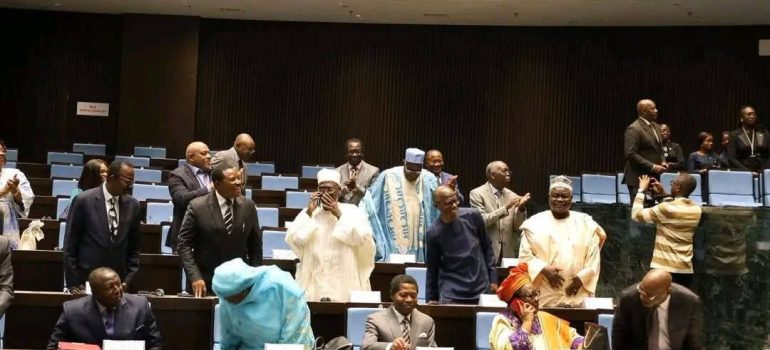
Adopted on March 23, 2026 during a plenary session chaired by the new President of the National Assembly, Théodore DATOUO, the bill extending the term of office of Members of Parliament by a further nine months, from March 30 to December 20, 2026, is creating controversy within the political class.
The decision does not meet with unanimous approval. Although article 15 paragraph 4 of the Constitution authorizes the President of the Republic to extend the term of office of deputies, the reasons put forward in this particular case do not, according to some players, justify this extension. This decision has provoked strong reactions, particularly from the opposition, where some denounce a «manipulation of the electoral calendar».
Contested financial and technical arguments
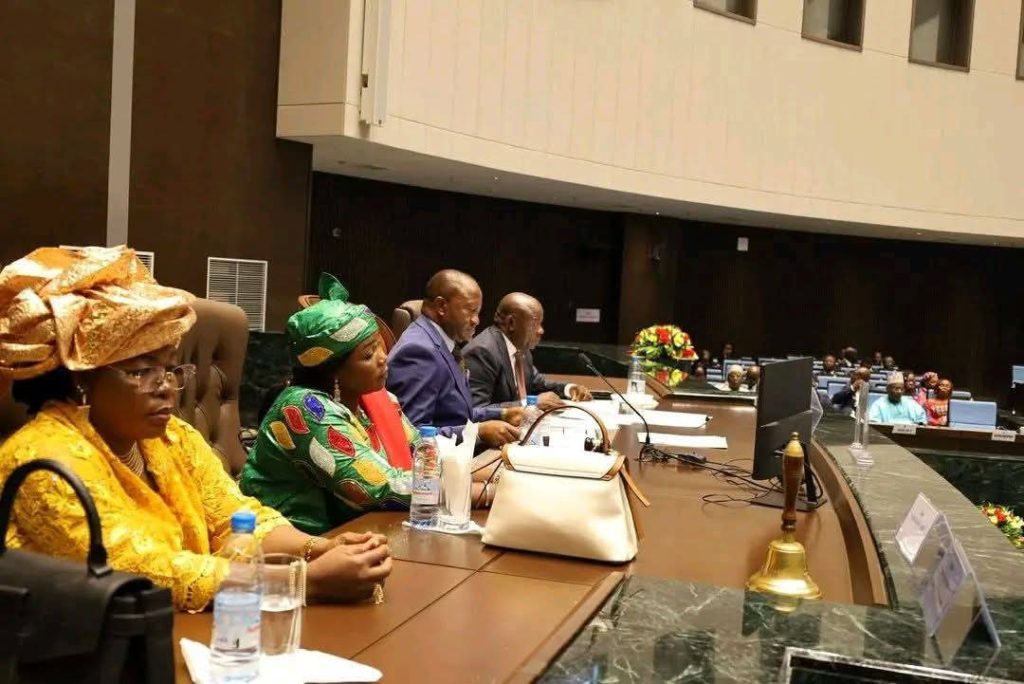
To justify this extension, the public authorities cite financial constraints. Indeed, after the presidential and regional elections, the State is facing budgetary tensions. These difficulties would complicate the simultaneous organization of municipal and legislative elections.
However, some politicians are not convinced by this argument. UDC MP Koupit Adamou rejects this justification. According to him, the 2026 budget had already provided funds for these elections.
Moreover, he finds it inconsistent to cite a lack of financial resources. He points out that other costly events are still scheduled, notably some international meetings.
The government also cited technical reasons. Damage sustained by ELECAM is said to have affected some of the electoral material. This damage, linked to the post-electoral demonstrations, would require time to bring the equipment up to standard.
However, these explanations also raise doubts. Koupit Adamou describes the arguments as «dilatory». He feels they lack clarity and precision.
According to him, the damage concerns only a few communal antennas. He mentions at most six out of 360 branches. He also points out that the electoral file, centralized in Yaoundé, remains intact.
Despite these criticisms, the parliamentarian recognizes the legality of this extension. Indeed, the Constitution gives this power to the President of the Republic.
Finally, the process remains unfinished at institutional level. The text adopted by the National Assembly is still awaiting promulgation. This stage is the exclusive responsibility of the President of the Republic.
Anita MENOUNGA

 Français
  English