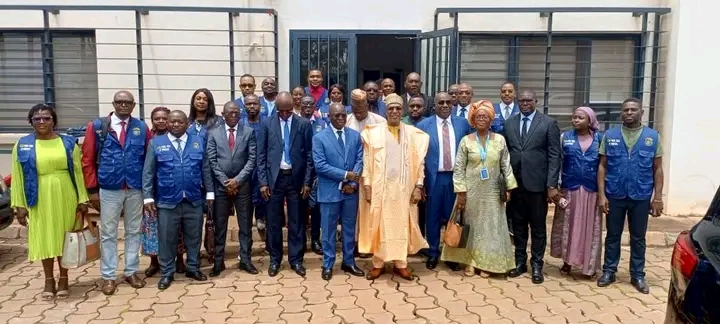
From April 29 to 30, 2026, Yaoundé, the political capital of Cameroon, hosted the National Forum on Road Safety. Held at the Palais des Sports in Yaoundé, the forum brought together experts, government officials, health professionals and transport stakeholders. They all discussed the major challenge of sustainably reducing accidents through technological innovation.
Faced with a resurgence in accidents, experts are calling for a change in approach. Today, artificial intelligence analyzes large quantities of traffic data in real time. It identifies high-risk areas, anticipates dangerous behavior and limits conflicts between users. In concrete terms, these technologies enable us to move from reactive management to a proactive approach. In other words, it's no longer just a question of intervening after an accident, but of preventing risks in the first place. Intelligent systems alert drivers, regulate traffic and reduce collisions, especially in urban environments. Artificial intelligence is also based on digital systems already in use, notably in telemedicine. This complementarity was a major topic of discussion at the forum.
Technology for prevention
One of the main advantages of artificial intelligence is its real-time analysis capability. It provides data on road conditions, traffic flow and weather conditions. This information continues to play a decisive role in improving road safety. In modern vehicles, intelligent cameras and sensors play an essential role. They detect signs of driver fatigue or drowsiness. As soon as a risk appears, the system triggers an alert and recommends a break.
Visual health, an often overlooked factor
Beyond technology, the forum highlighted an essential human factor: vision. The speakers reminded us that «our sight is our life». Indeed, many accidents are the result of undetected visual impairment. Drivers are often criticized for their lack of vigilance. Yet few actually check their eyesight before driving. The same applies to pedestrians, especially the visually impaired, who are highly exposed to risk. To meet this challenge, experts are encouraging the use of mobile applications based on artificial intelligence. These tools enable rapid vision testing before driving. They detect possible problems, recommend rest or refer for medical screening. Some drivers are already adopting this reflex by assessing their vigilance via their mobile phone. Even if this practice remains marginal, it could become widespread. In the long term, it could help reduce accidents linked to fatigue and visual problems.
At the same time, artificial intelligence is transforming the management of medical emergencies. For accident victims, examinations such as CT scans can be carried out rapidly. Teams then transmit the results remotely for specialist advice. What's more, AI optimizes medical triage by prioritizing the most serious cases. Contrary to popular belief, the noisiest patients are not always the most urgent. Thanks to its algorithms, AI can detect signs of seriousness, such as internal bleeding, and guide decisions.
Faster medicine and rethinking infrastructures
The performance of artificial intelligence is based on its speed in processing complex data. It provides reliable analyses and improves diagnostic accuracy. As a result, it facilitates more efficient patient care. Assisted medicine saves time, optimizes interventions and, above all, saves lives. For many experts, these tools are becoming indispensable in modern healthcare systems. Finally, the participants stressed the role of road infrastructure. Authorities need to reinforce roads to improve safety. Artificial intelligence can analyze their condition and identify accident-prone areas. Thanks to this data, decision-makers can better direct investments. This makes it possible to act upstream, rather than suffer the tragedy. At the end of this forum, one thing is clear. Artificial intelligence, combined with greater consideration for human factors, is ushering in a new era. Between technological innovation and user empowerment, solutions do exist. They can significantly reduce accidents and protect human lives.
Anita MENOUNGA

 Français
  English