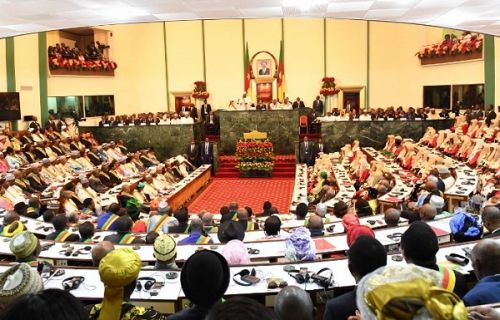
The first parliamentary session of 2026 opens this Tuesday, March 10, at the National Assembly of Cameroon and the Senate of Cameroon. This session sets the tone for the year's legislative activity. It promises to be an important one, given the many expectations of the Cameroonian people.
In accordance with the Constitution, parliamentarians begin their work on March 10. The session opens at 11 a.m. in the National Assembly and at 4 p.m. in the Senate. This first session takes place in a context marked by a number of social, economic and political challenges facing Cameroon.
Social and economic concerns at the heart of expectations
On the social front, a number of concerns persist. Gender-based violence is still rife. Cases of feminicide and domestic violence give cause for great concern. Furthermore, youth unemployment still limits their socio-professional integration. In the big cities, incivism is on the increase, fuelling a lack of respect for collective rules. These problems are of great concern to the public, and should be the subject of parliamentary debate.
Economic difficulties also play a central role. The high cost of living weakens household purchasing power. Food insecurity is a concern due to the limited availability of certain essential products. Added to this are rationing problems in certain sectors. Power cuts are also disrupting daily life and economic activities.
In addition, these various challenges are expected to fuel discussions during the 30 days of parliamentary proceedings. Members of parliament and senators represent the people. They must speak for the people and pass useful laws. Their mission is to improve people's living conditions. They also monitor government action and seek concrete solutions to national concerns.
Postponed elections and administrative reforms on the horizon
In addition to the social and economic issues at stake, a number of institutional issues are also likely to attract attention. The organization of the next legislative and municipal elections remains a central issue. These elections had been expected since the end of 2025. However, their postponement was announced last December by the Head of State, Paul Biya.
In this context, the extension of MPs' terms of office could be examined. The current mandate expires on March 30, 2026. Parliamentarians could therefore pass a law extending their mandate until the next elections.
Subsequently, a presidential decree could also extend the term of office of municipal councillors. Their current term of office ends on May 31, 2026. This measure would harmonize the electoral calendar.
In addition, the proposed new administrative division could be included in the discussions. The Minister of Territorial Administration, Paul Atanga Nji, recently issued guidance to administrative authorities on this issue.
This reflection concerns the possible creation of new regions, départements or arrondissements. Such a reorganization could influence the organization of future elections. In particular, it could modify the delimitation of electoral districts and the distribution of seats.
Between social concerns and institutional reforms, the March 2026 parliamentary session promises to be highly anticipated. Many citizens are hoping for concrete answers to the challenges facing the country.
Anita MENOUNGA

 Français
  English