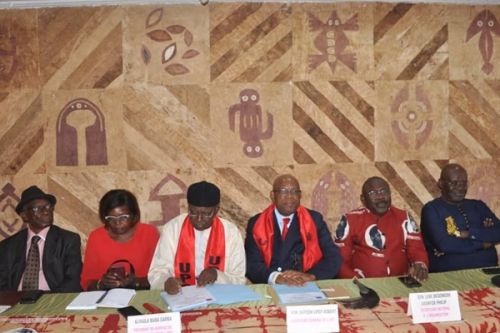
The Union des populations du Cameroun (UPC) commemorates its 78th anniversary on April 10. This symbolic date provides an opportunity to take stock of a political party whose history rhymes with that of the struggle for independence and the construction of Cameroon.
Origins and rise of a nationalist movement
The UPC was founded on April 10, 1948 in Douala, under the leadership of Ruben Um Nyobè, in a Cameroon under French and British tutelage. From the outset, the party adopted a clear political line: independence and reunification of the Cameroonian territories.
Under the impetus of its founder, a leading figure in Cameroonian nationalism, the party quickly built up a vast network of militants, unions and local committees. This organization mobilized the population, making the UPC the first major mass political movement in Cameroon.
Under the impetus of its founder, a leading figure in Cameroonian nationalism, the party quickly built up a vast network of militants, unions and local committees. This organization mobilized the population, making the UPC the first major mass political movement in Cameroon.
In the early 1950s, the UPC stepped up its demands. It took its voice to the international stage and called on the United Nations. It denounced the excesses of the colonial system and defended the self-determination of the Cameroonian people.
The colonial administration deemed the party a threat. It officially banned the party on July 13 1955, provoking a major break in its development.
Forced underground, the movement engaged in armed struggle. Colonial repression intensified, aimed at destroying its networks and eliminating its leaders. This period was marked by the disappearance of figures such as Félix-Roland Moumié, assassinated in 1960, and Ernest Ouandié, executed in 1971.
Cameroon gained independence on January 1, 1960. Yet the UPC, which had been at the forefront of this struggle, remained excluded from power. This exclusion permanently weakened the party, which had already been weakened by the repression. A long period of marginalization set in, marked by internal divisions and a gradual loss of influence.
Between the 1960s and 1980s, the UPC evolved in a restrictive political context. It oscillated between clandestinity and fragmentation, which severely limited its action.
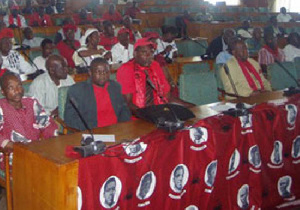
The return to a multi-party system in the early 1990s marked a turning point. The UPC regained its legality and attempted to reposition itself on the national political scene. It took part in the 1992 presidential election with Samuel Mack Kit as its candidate. However, internal divisions and political changes limited its electoral results.
A lasting political and symbolic legacy
UPC retains a strong symbolic importance. It contributes to the political awakening of citizens, encourages commitment and fuels public debate.
It also brings the Cameroon question to the international stage and contributes to its recognition.
A weakened party, but an enduring memory
Today, the UPC remains present on the Cameroonian political scene. However, internal divisions are weakening the party. Several tendencies claim its historical heritage.
Despite his reduced political influence, his legacy continues to inform thinking on democracy, governance and development in Cameroon.
Anita MENOUNGA
Anita MENOUNGA

 Français
  English